The Role of a Website in Client Acquisition
The Role of a Website in Client Acquisition

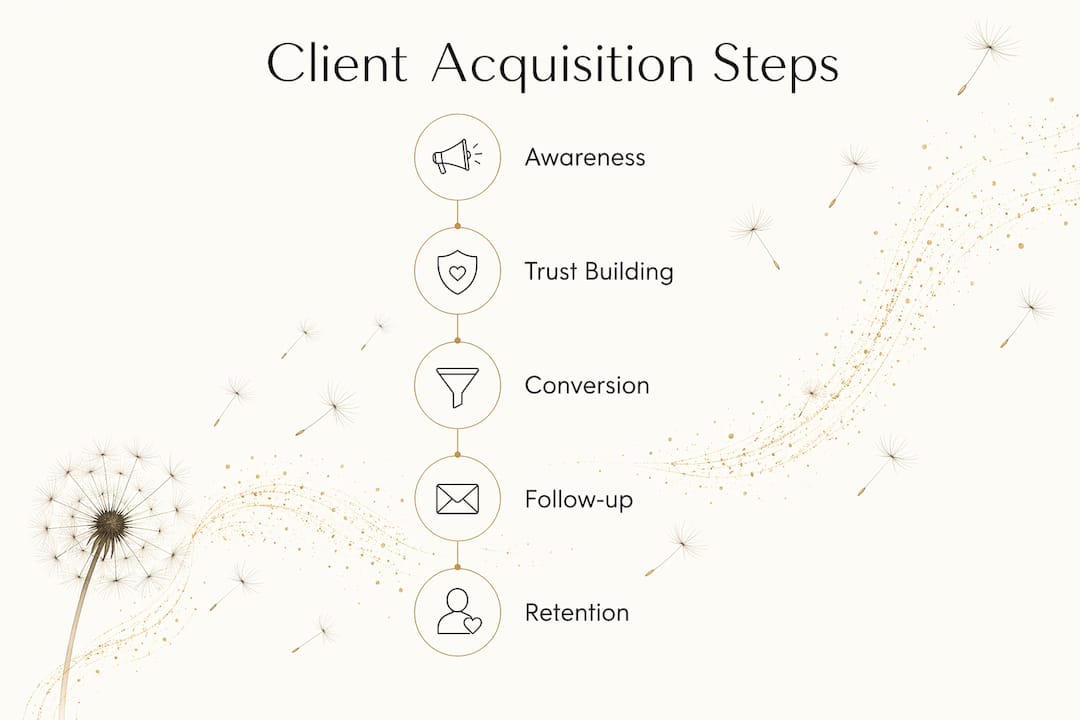
Your website is the single most powerful client acquisition tool your business owns. Unlike social media profiles or referral networks, a well-built website works around the clock to clarify your offer, build trust, and move visitors toward a decision. The role of website in client acquisition goes far beyond a digital business card. It functions as a decision engine: guiding prospective clients from first impression to booked call, without you being in the room. Small business owners who treat their websites as passive placeholders leave real revenue on the table.
How does a website build trust and credibility to attract clients?
Trust is the first conversion. Before a visitor fills out a form or books a call, they need to believe you are the right choice. Professional website design directly influences that belief, with well-designed sites increasing conversion rates by up to 400%. That number reflects a simple truth: visual credibility signals competence before a single word is read.
Social media presence alone does not close that gap. A polished Instagram feed shows personality. A well-structured website shows proof. High-ticket clients rely on website credibility to justify significant investments, and they look for specific evidence: case studies, client testimonials, clear service descriptions, and visible contact information. Referrals and social posts cannot provide that level of structured reassurance.
The most effective trust-building websites share several features:
- Clear, professional design with consistent fonts, colors, and spacing that signals attention to detail
- Client testimonials and case studies placed near service descriptions, not buried in a separate tab
- An “About” section that shows the person behind the business, not just a list of credentials
- Visible contact options such as a phone number, email address, or booking link in the header
- Certifications, press mentions, or partnerships displayed prominently as social proof
One mistake many small business owners make is leading with a sales pitch. Avoiding aggressive early selling preserves visitor trust and nurtures leads more successfully. A visitor who arrives cold needs orientation before they need an offer.
Pro Tip: Add one specific client result to your homepage, such as “Helped a local bakery increase online orders by 60% in 90 days.” Specific outcomes build more trust than general claims like “We get results.”

What website features and content drive client acquisition effectively?
A website that generates qualified client actions follows a clear sequence: make the offer legible, build belief through proof, remove action friction, and support the lead conversion system. Each step depends on specific features working together.
The most effective client acquisition websites use these components in order:
- A clear headline on the homepage that states who you help and what outcome you deliver, in plain language
- A visible primary call-to-action (CTA) above the fold, such as “Book a Free Call” or “Get a Quote Today”
- Service pages with specific descriptions that answer the visitor’s core question: “Is this for me?”
- Educational content such as blog posts, guides, or FAQs that address common concerns before the sales conversation
- Lead capture forms connected to an email sequence or CRM so no inquiry falls through the cracks
- A booking or contact tool that removes friction from the next step, whether that is a calendar embed or a short form
Content format matters as much as content quality. Aligning content with buyer stages means using educational posts for awareness, case studies for consideration, and direct CTAs for decision. A visitor reading a blog post is not ready to buy. A visitor on your pricing page probably is. Treating both the same way wastes both their time and yours.
Website automation tools such as lead capture forms linked to a CRM make follow-up consistent and fast. Businesses that automate their web lead process convert more inquiries into paying clients because speed and consistency matter in the first 24 hours after contact.
| Feature | Purpose | Impact on acquisition |
|---|---|---|
| Clear homepage headline | Communicates offer immediately | Reduces bounce rate |
| Primary CTA above the fold | Directs visitor to next step | Increases form submissions |
| Educational blog content | Builds authority and organic traffic | Attracts cold leads over time |
| Lead capture form with CRM link | Captures and routes inquiries | Prevents lost leads |
| Booking tool or calendar embed | Removes friction from conversion | Increases booked consultations |
Pro Tip: Test your website’s clarity by asking someone unfamiliar with your business to read your homepage for 10 seconds. If they cannot explain what you do and who you help, rewrite the headline.
How does a website function as part of a broader client acquisition ecosystem?
A website does not work in isolation. It works as the central hub that receives traffic from every other channel and converts it. Websites that integrate SEO, paid ads, social media, and CRM systems maximize client acquisition by giving every channel a single, optimized destination.
Think of your website as the place where all roads lead. A Facebook ad, a Google search, a referral from a partner, and a mention in a podcast all send people to your website. What happens when they arrive determines whether that traffic becomes revenue.
The ecosystem approach means your website must do several things well:
- Receive SEO traffic by targeting the search terms your ideal clients actually use, which requires search-friendly page structure and content built for organic growth
- Convert paid ad traffic with dedicated landing pages that match the ad’s message exactly, not your generic homepage
- Support referral partnerships by giving partners a clear, professional page to send their contacts to, which builds trust before the first conversation
- Track visitor behavior using tools like Google Analytics or heatmaps to identify where visitors drop off and where they convert
Partnerships and referral collaborations supported by a credible website generate higher-trust leads. A partner who refers a client to your website is vouching for you. If the site looks disorganized or unclear, that referral loses confidence fast.
The online visibility checklist for entrepreneurs covers the full range of channels that feed into your website. Getting each channel aligned with your site’s messaging is what turns scattered traffic into a predictable client pipeline.
What practical steps can small businesses take to optimize their websites for client acquisition?
Most small business websites underperform not because of bad design, but because of unclear messaging and missing conversion paths. The fix is methodical, not expensive.
Start with a clarity and trust audit of your current site:
- Read your homepage headline out loud. Does it say who you help and what result they get?
- Check whether your primary CTA is visible without scrolling on both desktop and mobile
- Count your trust signals: do you have at least three testimonials, one case study, or one visible credential?
- Test your contact or booking process from start to finish. How many clicks does it take?
- Review your page load speed using Google PageSpeed Insights. Slow sites lose visitors before the page even loads
After the audit, prioritize fixes in this order: messaging first, trust signals second, CTAs third, and automation last. Fixing your headline costs nothing. Adding a testimonial takes an hour. Both changes can move your conversion rate more than a full redesign.
Consultant websites that convert clients share one common trait: they make the next step obvious. Every page answers the question “What should I do now?” with a clear, low-friction option.
Common pitfalls to avoid:
- Too many CTAs on one page confuse visitors. Pick one primary action per page.
- Stock photos instead of real images reduce trust. Use actual photos of your work, your team, or your clients when possible.
- No mobile optimization means losing a large share of visitors who browse on phones.
- Outdated content signals inactivity. A blog post from 2019 tells visitors you may not be in business anymore.
Key takeaways
A website functions as a client acquisition system only when it combines clear messaging, visible trust signals, and frictionless conversion paths working together.
| Point | Details |
|---|---|
| Trust before selling | Build credibility with testimonials, case studies, and professional design before presenting an offer. |
| Content by buyer stage | Match page content to where the visitor is: educational for awareness, proof for consideration, CTA for decision. |
| Website as ecosystem hub | All marketing channels should lead to your website, which must be built to convert each traffic source. |
| Automation closes gaps | Connect lead forms to a CRM so every inquiry gets a fast, consistent follow-up. |
| Clarity audit first | Fix messaging and CTAs before investing in design or paid traffic. |
Why I think most small business websites are solving the wrong problem
Christopher here. After working with dozens of small business owners on their websites, the pattern is consistent. Most owners think their website problem is a design problem. They want it to look better. What they actually have is a clarity problem. The site looks fine. It just does not tell visitors what to do or why they should trust you.
The shift that changes everything is treating your website as an operating system, not a brochure. A brochure sits there. An operating system guides visitors through a sequence: here is what we do, here is proof it works, here is your next step. That sequence is what converts a curious visitor into a booked client.
The second thing I see constantly is owners investing in paid ads before their website is ready to convert. You can spend hundreds of dollars sending traffic to a page that has no clear CTA and no trust signals. The ads are not the problem. The destination is. Fix the website first, then spend on traffic.
The businesses that grow steadily through their websites are not the ones with the most expensive designs. They are the ones who revisit their site every quarter, update their proof points, sharpen their headlines, and make the next step easier. That is not a one-time project. It is an ongoing practice. And it compounds.
— Christopher
Your website should be working harder for your business
If your website is not consistently generating inquiries, the structure, messaging, or conversion path needs attention. Moderatemurmurations builds fast, clean websites and digital systems designed specifically to attract and convert clients for small businesses, service providers, and creators.
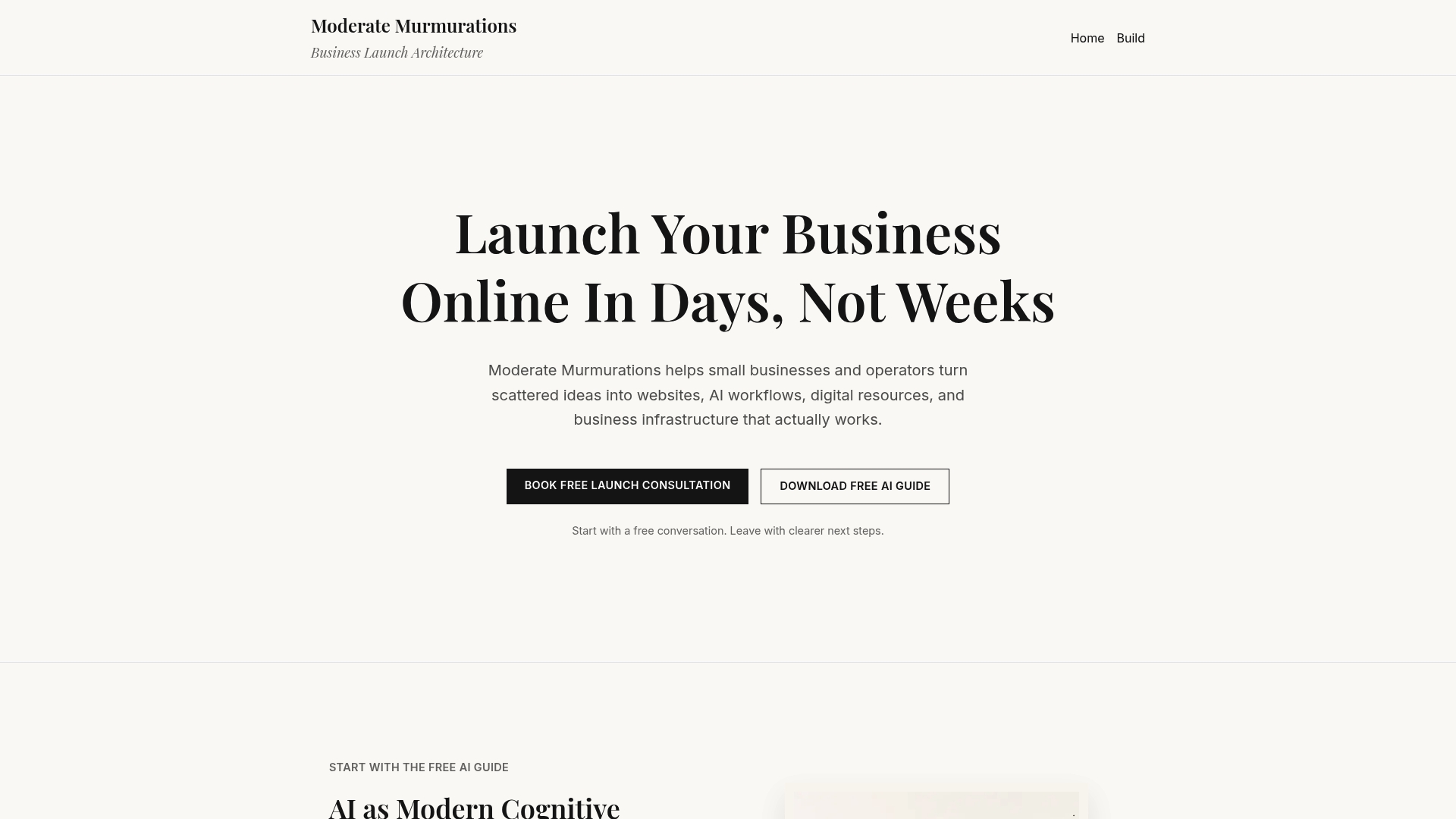
From AI-assisted website launches to full digital infrastructure with CRM integration and SEO foundations, Moderatemurmurations handles the technical and creative work so you can focus on serving clients. Whether you are starting from scratch or rebuilding a site that is not performing, the build process is clear, fast, and built around your acquisition goals.
FAQ
What is the role of a website in client acquisition?
A website guides prospective clients through awareness, trust-building, and conversion by combining clear messaging, proof points, and direct calls-to-action. It functions as a 24/7 sales and credibility system for your business.
How does website design affect client trust?
Professional website design can increase conversion rates by up to 400% by signaling credibility and competence before a visitor reads a single word. Disorganized or outdated design reduces trust immediately.
Do I need a website if I already have social media?
Social media builds visibility, but it cannot replace the structured proof and conversion paths a website provides. High-value clients specifically look for websites to verify credibility before committing to a purchase.
What is the most important element of a client acquisition website?
A clear homepage headline that states who you help and what outcome you deliver is the single highest-impact element. Without it, even well-designed sites fail to convert visitors into inquiries.
How does website automation support client acquisition?
Lead capture forms connected to a CRM automate follow-up and prevent inquiries from going unanswered. Consistent, fast responses after first contact significantly improve the rate at which web leads become paying clients.