How to Create a Wellness Brand Online Presence
How to Create a Wellness Brand Online Presence

A wellness brand online presence is defined as the complete system of digital touchpoints, from your website to your social profiles, that shapes how potential clients find, judge, and trust your brand before they ever contact you. The global wellness industry is valued at over $6.8 trillion in 2026, with projections reaching $8.5 trillion by 2030. That scale means opportunity, but it also means noise. With 84% of consumers naming wellness a top priority, the brands that win are the ones that build trust fastest. This guide gives you a clear, practical path to do exactly that.
How to create a wellness brand online presence that builds trust
Building a digital presence for a wellness brand is not just about having a website and a few social posts. It is about constructing a trust infrastructure, a term used in digital brand strategy to describe the combination of visual consistency, credible content, and social proof that convinces a stranger to become a paying client. Every element you put online either adds to that infrastructure or weakens it.
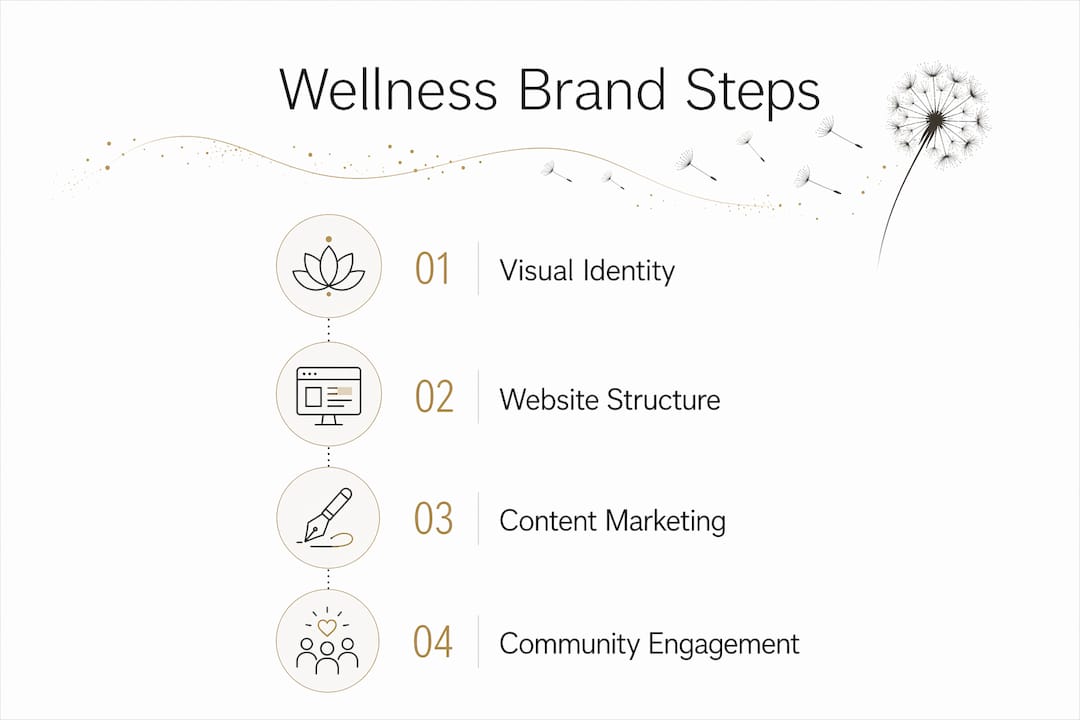
The most effective wellness brands treat their online presence as a system with four connected parts: visual identity, website, content, and community engagement. Each part reinforces the others. A strong visual identity makes your website feel credible. A credible website gives your content a home. Consistent content builds the audience that drives community engagement. Skipping any one part creates a gap that potential clients notice, even if they cannot name what feels off.

What makes a wellness brand visual identity work?
Visual identity is a system connecting colors, typography, photography, and design patterns that must be applied consistently across every touchpoint. It is not just a logo. A logo is one element. The system is what makes your brand feel the same on your website, your Instagram grid, your email newsletters, and your product packaging.
Wellness consumers are fast judges. Trustworthiness is assessed in under 50 milliseconds, driven primarily by visual cues. That means your color palette and photography style are doing persuasion work before a single word is read. Consistent branding can boost market share by 2–3 times and online sales by 40%. Those numbers reflect the compounding effect of recognition over time.
The most common mistake wellness entrepreneurs make is relying on clichéd stock photos. Images of green smoothies, lotus flowers, and serene white backgrounds blend into every other wellness brand online. Authentic, real-life photography converts more visitors by building faster trust. Warm, human imagery of real people in real moments signals credibility in a way that polished stock never can.
Your visual identity checklist should include:
- A defined color palette of 3–5 colors with clear usage rules
- Two to three typefaces with assigned roles (headings, body, accent)
- A brand photography style guide covering lighting, subject, and mood
- Consistent design patterns for social graphics, email headers, and web banners
User-generated content (UGC) is the highest-trust visual format available to wellness brands. Reposting real client photos and testimonials builds social proof that branded photography cannot replicate. UGC signals that real people use and value your product or service.
Pro Tip: Create a branded hashtag and actively invite clients to share their experiences. Curate the best submissions into a dedicated highlight on Instagram and a testimonials section on your website. This creates a self-reinforcing trust loop that grows with every new client.
What does a high-converting wellness website need?
Your website is your most important digital asset. Social platforms change their algorithms. Email lists can be disrupted. Your website is the one place you fully control, and it needs to work hard for you around the clock.
A high-converting wellness website requires five core pages:
- Homepage: Clear headline stating who you help and how, with a direct call to action above the fold.
- Services or products page: Detailed descriptions focused on client outcomes, not just features.
- About page: Framed around the client’s transformation, not your credentials.
- Blog or resources section: Educational content that builds authority and supports SEO.
- Booking or contact page: Frictionless path to the next step, with no unnecessary form fields.
Beyond structure, the features that drive conversions are specific. Transformation-led messaging and prominently displayed client reviews form the trust infrastructure critical for wellness product and service pages. Clients respond to messaging that addresses their current pain points, not your provider credentials. Lead with the outcome they want, then support it with your qualifications.
Integrating more than 20 detailed client reviews and risk-reversal guarantees above the fold significantly boosts conversions. A risk-reversal guarantee, such as a satisfaction promise or a free first consultation, removes the hesitation that stops first-time buyers. Place it prominently, not buried in the footer.
Local SEO is equally critical for wellness brands that serve a geographic area. Wellness practices with fewer than 30 reviews on Google Business Profile risk losing significant traffic to competitors. Your Google Business Profile needs a complete description, updated hours, current photos, and a steady stream of new reviews to stay competitive in local search results.
| Website element | Trust impact |
|---|---|
| 20+ detailed client reviews above the fold | High: reduces purchase hesitation |
| Transformation-led homepage headline | High: connects emotionally before credentials |
| Risk-reversal guarantee prominently placed | Medium-high: removes first-time buyer friction |
| Updated Google Business Profile | Medium: captures local search traffic |
| Blog with educational content | Medium: builds long-term SEO authority |
Pro Tip: Set a monthly calendar reminder to update your Google Business Profile. Add new photos, respond to every review, and post a short update about any new services or offers. Local profile maintenance directly affects how often you appear in “near me” searches.
How does content marketing build wellness brand authority?
Content marketing is the process of publishing educational, useful material that answers your audience’s real questions. For wellness brands, it is also the primary way to demonstrate expertise without sounding like an advertisement. The goal is to be the most helpful voice in your niche, consistently.
Consistent publishing of educational content on TikTok and Instagram builds perceived authority and reduces client skepticism. Short-form video targeting specific problem communities is especially effective. A nutritionist posting a 60-second video on managing energy crashes reaches people actively searching for that solution, not just passive scrollers.
Your content strategy should align with your brand purpose and your audience’s pain points. A strong content strategy maps each piece of content to a specific question your ideal client is asking. This keeps your publishing focused and prevents the scattered approach that dilutes brand authority.
Effective content formats for wellness brands include:
- Short-form video (60–90 seconds) addressing one specific problem
- Long-form blog posts (800–1,500 words) targeting search queries
- Client success stories shared as social posts or case study pages
- Email newsletters with one practical tip per issue
Pro Tip: Write one long-form blog post each month, then break it into five to seven short-form social posts, one email newsletter segment, and two to three short video scripts. This approach multiplies your output without multiplying your workload. Blogging for visibility compounds over time as each post continues attracting search traffic long after it is published.
Where should you engage your wellness audience online?
The right platform is the one where your specific audience already spends time. Posting everywhere at low quality produces less result than posting on two platforms with genuine consistency and care. The first step is identifying where your ideal clients are most active, then showing up there with real value.
Community marketing strategies help wellness brands connect with clients both online and offline to build loyalty. Engaged communities drive better long-term brand trust and client retention than any paid advertising campaign. The brands that build communities, not just audiences, create clients who refer others without being asked.
Authentic social media presence means genuine interaction, not just scheduled posts. Reply to comments with real answers. Ask questions in your captions. Share behind-the-scenes content that shows the human side of your brand. Avoid the trap of only posting polished promotional content, which signals a brand talking at people rather than with them.
Key practices for building an engaged wellness community online:
- Respond to every comment and direct message within 24 hours
- Use polls and question stickers on Instagram Stories to invite participation
- Create a private Facebook Group or community space for clients and followers
- Collaborate with complementary wellness practitioners for cross-audience reach
Pro Tip: Post at the times your specific audience is most active, not the generic “best times” from industry articles. Check your platform analytics weekly and shift your posting schedule to match the hours when your followers actually engage. Consistency in timing trains your audience to expect and look for your content.
Key takeaways
A wellness brand’s digital presence succeeds when visual identity, website structure, content, and community engagement work together as a single trust-building system.
| Point | Details |
|---|---|
| Visual identity is a system | Apply consistent colors, typography, and photography across every digital touchpoint. |
| Website structure drives conversions | Include five core pages and place reviews and guarantees above the fold. |
| Content builds authority over time | Publish educational content consistently and repurpose it across multiple formats. |
| Local SEO captures nearby clients | Maintain a complete, updated Google Business Profile with 30 or more reviews. |
| Community beats audience | Engage genuinely on two focused platforms rather than posting broadly with low effort. |
What I have learned building wellness brands online
The single biggest mistake I see wellness entrepreneurs make is treating their online presence as a launch task rather than an ongoing system. They build a website, post for a few weeks, then go quiet. The brands that grow are the ones that treat their digital presence like a living practice, something they tend to regularly, not something they set up once.
Trust infrastructure is the foundation. Before you think about paid ads or influencer partnerships, your visual identity needs to be consistent, your website needs real client reviews, and your content needs to answer real questions. Without that foundation, paid traffic lands on a page that does not convert. You are spending money to send people to a leaky bucket.
The other pattern I notice is that wellness entrepreneurs underestimate local SEO. If you serve clients in a specific city or region, your Google Business Profile is often the first thing a potential client sees. An incomplete profile with three outdated photos and no recent reviews loses business every single day to a competitor who simply keeps theirs current. That is a fixable problem that costs nothing but attention.
Authentic imagery and real client voices are not optional extras. They are the core of what makes a wellness brand feel trustworthy online. The brands that build online authority fastest are the ones willing to show real people, real results, and real stories. Polish matters, but humanity matters more.
— Christopher
What Moderatemurmurations builds for wellness brands
Moderatemurmurations specializes in fast, clean websites, brand copy, and digital systems built specifically for wellness entrepreneurs who need a polished online presence without months of back-and-forth.
Every project starts with clear messaging and a search-friendly structure, so your site works from day one. Moderatemurmurations handles the website build, SEO foundations, and AI-assisted content systems so you can focus on your clients instead of your tech stack. If you are ready to put the strategies in this guide into practice, launch your wellness brand with a team that understands what wellness audiences need to see before they trust a brand. You can also review the full range of website and digital services to find the right fit for where your brand is right now.
FAQ
What is a wellness brand online presence?
A wellness brand online presence is the full set of digital assets, including your website, social profiles, and content, that potential clients encounter before making a purchase or booking decision. It functions as your brand’s trust infrastructure online.
How many reviews does a wellness brand need on Google?
Wellness practices with fewer than 30 reviews on Google Business Profile risk losing significant local search traffic. Aim for 30 or more detailed reviews and respond to each one to signal active engagement.
What visual identity elements matter most for wellness brands?
Color palette, typography, and photography style are the three elements that most directly affect first impressions. Trustworthiness is judged in under 50 milliseconds, so these elements must be consistent across every platform.
Which social media platform works best for wellness brands?
The best platform is the one where your specific audience is most active. Short-form video on TikTok and Instagram consistently builds authority for wellness brands, but the right choice depends on your niche and the age range of your ideal client.
How often should a wellness brand publish content?
Consistency matters more than frequency. Publishing one high-quality blog post and three to five social posts per week builds more authority than daily low-effort posts. Repurposing one long-form piece into multiple formats keeps output steady without burning out.