Build Your Coaching Business Online Presence Fast
Build Your Coaching Business Online Presence Fast

Building a coaching business online presence means creating a professional brand and digital platform that attract, engage, and convert clients consistently. This is not about having a perfect logo or a beautiful website. It is about positioning yourself clearly, setting up the right digital assets, and reaching out to the right people. Coaches who follow a structured approach to their digital coaching presence land their first clients faster and build sustainable practices. This guide gives you the exact steps to do that, from brand foundation to your first booking.
How to build a coaching business online presence that attracts clients
A coaching brand is defined by positioning, not by logos and colors. Clear brand positioning means answering three questions before you write a single word of website copy: Who do you serve? What specific problem do you solve? What makes your method different from every other coach in your space?
Most new coaches skip this step and go straight to picking fonts. That is a costly mistake. Without clear positioning, your messaging attracts no one in particular, which means it converts no one at all. Your niche filters your content, your outreach, and your pricing. A career coach who works with burned-out tech managers at mid-career crossroads will attract far more qualified leads than one who simply calls herself “a life coach.”
Defining your niche does not take months. A solid first pass takes a few focused hours. You will refine it as you work with real clients, but you need a working version before you build anything else.

Pro Tip: Write your positioning in one sentence: “I help [specific person] achieve [specific outcome] through [your method].” Post it at the top of every page on your site and at the top of your social media bio.
Which digital assets does a coaching website actually need?
Your coaching website is not a brochure. It is a 24/7 sales system that builds trust, answers objections, and moves visitors toward booking. The difference between a brochure site and a client acquisition system is structure and intent.
Six pages form the core of a high-converting coaching site:
- Home: Clear headline stating who you help and what outcome they get, with a direct call to action
- About: Your story, credentials, and why you coach this specific niche
- Services: Specific program names, outcomes, formats, and pricing
- Booking: A live calendar with payment integration so clients can book without emailing you
- Blog: SEO content that drives organic search traffic over time
- Privacy Policy: Required for legal compliance and client trust
Optimized landing pages generate 55% more leads than sites without dedicated conversion pages. That number reflects the difference between a page built to inform and a page built to convert. Every page on your site should have one clear next step.
Before you publish, run through this checklist:
| Element | What to check |
|---|---|
| SEO basics | Page titles, meta descriptions, and H1 headings include your niche keywords |
| Messaging clarity | A stranger can understand who you serve within 5 seconds of landing on your home page |
| Booking integration | Clients can schedule and pay without sending you an email |
| Mobile display | Every page loads cleanly on a phone screen |
| Case studies or testimonials | At least one real client result is visible before the fold |
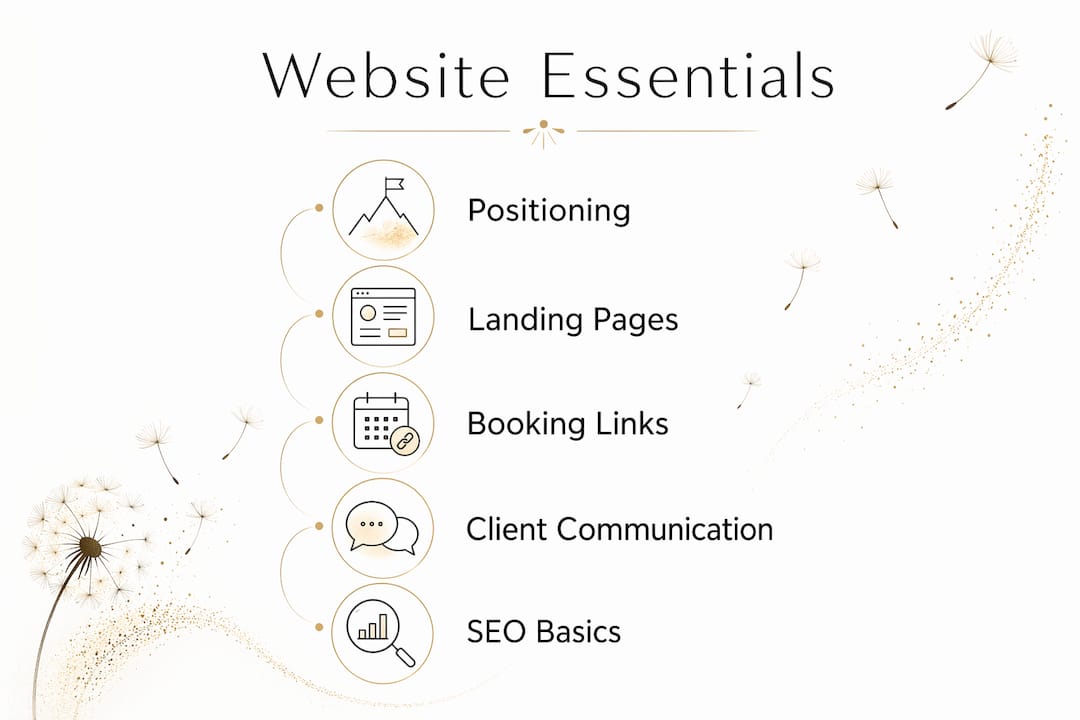
Integrated platforms that combine booking, onboarding, and client communication reduce the administrative overhead that eats into your coaching hours. A professional coaching profile with bio, services, pricing, and booking can be live in under 30 minutes on modern platforms. Start simple and add complexity as your practice grows.
Pro Tip: Launch a single landing page with your positioning statement, one service offer, and a booking link before you build the full site. You can start generating leads the same week.
How to use social media to grow your coaching audience
Social media builds trust over time. It is not a fast client acquisition channel for most coaches, and treating it as one leads to frustration. The right approach is to choose one platform, post consistently, and use that content to demonstrate expertise rather than to sell directly.
Platform selection depends on where your ideal client already spends time. LinkedIn works well for executive coaches, career coaches, and business coaches. Instagram and TikTok reach wellness coaches, life coaches, and fitness coaches. YouTube suits coaches who teach complex frameworks or want long-form authority content. Pick one and commit to it for at least 90 days before evaluating results.
- Choose your platform based on your niche and where your ideal client is active
- Post 3–5 times per week with a mix of coaching tips, client success stories, and personal insights from your practice
- Engage in comments on posts from potential clients and peers in your niche, not just on your own content
- Build your email list from day one, because email remains a permanent owned channel while social media algorithms shift without warning
- Add a direct call to action to your bio and at least one post per week pointing followers to your booking page
Cold social media posts rarely convert without direct outreach running alongside them. Social content warms your audience. Direct outreach closes the deal. You need both working together.
What role does direct outreach play in landing your first clients?
Direct outreach to your existing network is the fastest way to secure your first 5–10 coaching clients. This is not cold calling. It is reaching out to former colleagues, friends, and followers who already know and trust you, and telling them clearly what you now do and who you help.
Your outreach message needs three things: your niche, the outcome you deliver, and a specific ask. Here is what that looks like in practice:
- State your niche clearly: “I now work with mid-career professionals who want to move into leadership roles.”
- Name the outcome: “I help them get promoted or land a new role within six months.”
- Make a specific ask: “Do you know anyone who might benefit from a free 30-minute call with me?”
Referrals are the top client acquisition channel at every stage of a coaching business. Asking your network to refer you costs nothing and produces results faster than any paid advertising campaign. Paid ads are not worth the investment until you have worked with at least 10 clients and can articulate your results clearly.
Combine outreach with your content marketing for compounding results. Your social posts give people something to share when they refer you. Your website gives referred prospects a place to learn more and book. The two systems reinforce each other.
Pro Tip: Send 10 personal outreach messages in your first week. Not mass emails. Personal notes to specific people. Track who responds and follow up once after five days.
Common mistakes new coaches make when building online
The biggest mistake new coaches make is spending months perfecting their website before talking to a single potential client. A logo does not generate revenue. A booking does.
Watch out for these patterns:
- Over-preparing digital assets: Spending weeks on color palettes, font choices, and website copy before doing any outreach delays your first client by months
- Relying on cold social posting alone: Posting content without direct outreach or referral requests produces slow results, especially in the first year
- Building a patchwork of tools: Connecting separate scheduling apps, payment processors, email platforms, and client portals creates friction for clients and extra work for you. Disparate tools create client experience friction that integrated platforms eliminate
- Prioritizing design over conversion: A beautiful site with no clear call to action, no booking link, and no social proof will not convert visitors into paying clients
The coaches who land clients fastest are not the ones with the best websites. They are the ones who started talking to people before their site was ready.
Organic search, social media, referrals, and paid advertising are the four primary traffic sources for coaching businesses. New coaches should focus on referrals and organic content first. Both cost time rather than money, and both build the credibility that paid ads cannot manufacture.
Key takeaways
A coaching business online presence succeeds when clear positioning, a conversion-focused website, consistent social content, and direct outreach work together from day one.
| Point | Details |
|---|---|
| Position before you design | Define who you serve and what outcome you deliver before building any digital asset. |
| Build a conversion system | Your website needs booking integration and social proof, not just attractive design. |
| Pick one social platform | Post 3–5 times weekly on one platform and build your email list from the start. |
| Start with direct outreach | Contact your existing network first. Referrals close faster than any other channel. |
| Avoid patchwork tools | Use integrated platforms to reduce friction for clients and admin time for you. |
What I have learned from watching coaches launch online
I have worked with enough coaches to see the same pattern repeat. The ones who struggle longest are the ones who treat their website as the product. They polish it, revise it, and wait for it to do the work. The ones who grow fastest treat their website as a support tool for conversations they are already having.
The most effective thing a new coach can do in week one is send ten personal messages. Not a newsletter blast. Not a social post. Ten individual notes to people who know them, explaining what they do now and asking for a referral. That single action has produced first clients for coaches who had no website at all.
Technology matters, but it matters second. An integrated platform that handles booking, payment, and client communication removes real friction once clients are coming in. But no platform generates clients on its own. The sequence is: position clearly, talk to people, then build the systems to support the volume.
The other thing I see coaches underestimate is the email list. Social platforms change their algorithms constantly. An email list is yours. Start collecting emails from day one, even if you only send one message per month. That list becomes one of your most valuable assets within a year.
Start before you feel ready. Refine as you go. The coaches who wait for perfect are still waiting.
— Christopher
How Moderatemurmurations helps coaches launch online fast
Moderatemurmurations builds fast, clean websites, landing pages, and digital systems designed specifically for service providers and coaches who need a professional online presence without months of setup.
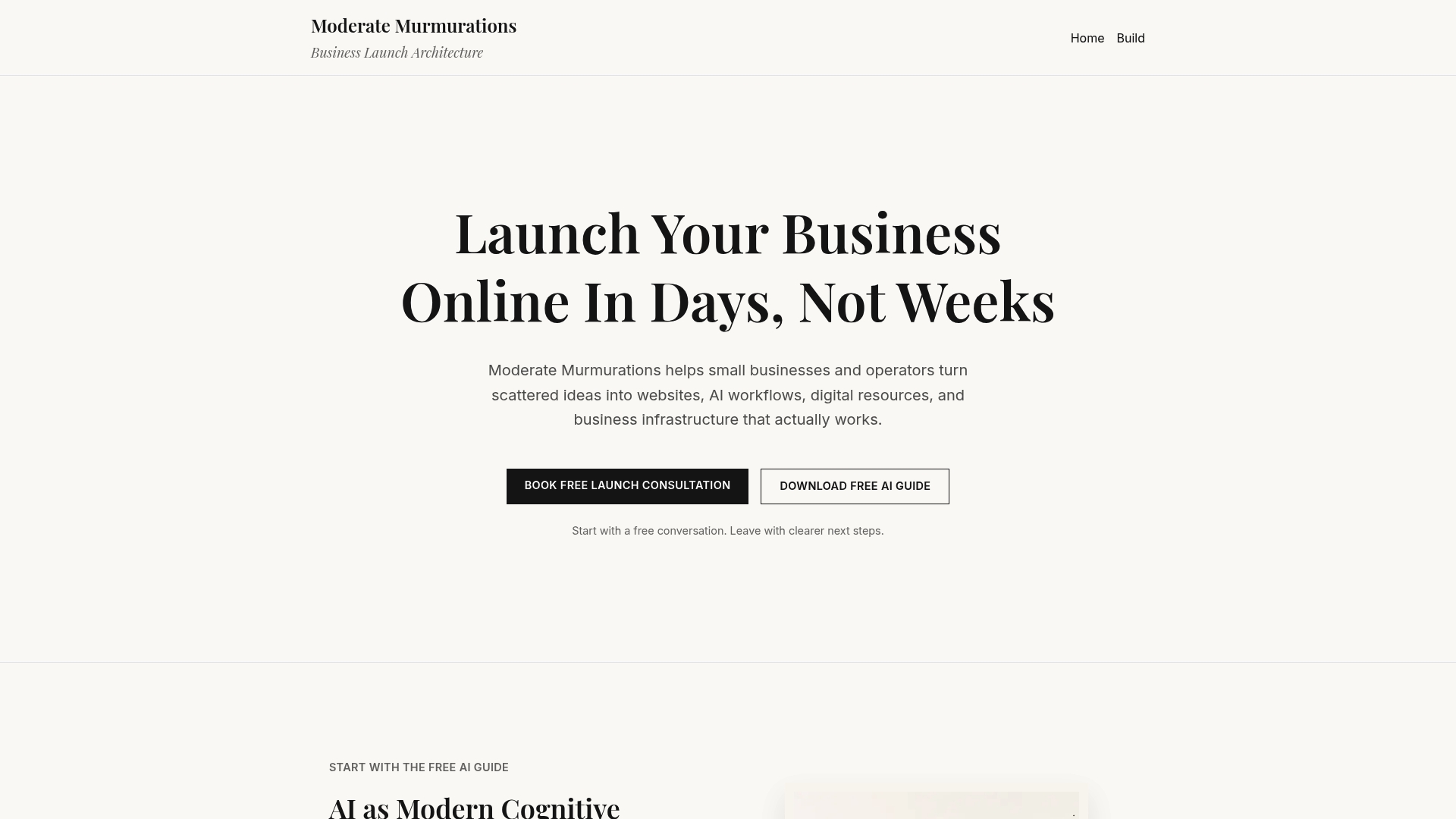
If you are ready to launch your coaching business online without the technical headaches, Moderatemurmurations handles the website structure, SEO foundations, brand copy, and booking integration so you can focus on coaching. For coaches who want a full digital setup including AI workflows and integrated client systems, the build services page outlines exactly what is included. You can go from idea to live, client-ready website in days, not months.
FAQ
What is the fastest way to get my first coaching clients online?
Direct outreach to your existing network is the fastest method. Contact former colleagues and followers with a clear message about your niche and ask for referrals before investing in marketing.
How many pages does a coaching website need?
A coaching website needs six core pages: Home, About, Services, Booking, Blog, and Privacy Policy. Each page should have one clear call to action pointing visitors toward booking.
Which social media platform is best for coaches?
The best platform is where your ideal client already spends time. LinkedIn works for business and career coaches, while Instagram and TikTok reach wellness and life coaching audiences more effectively.
How often should a coach post on social media?
Coaches should post 3–5 times per week on their chosen platform, mixing coaching tips, client results, and personal insights to build consistent visibility and trust.
Do I need a full website before I start coaching online?
No. A single landing page with your positioning, one service offer, and a booking link is enough to start. A professional coaching profile can be live in under 30 minutes on modern integrated platforms.