Human Led AI Landing Pages for SMBs That Convert 4–5x
Human Led AI Landing Pages for SMBs That Convert 4–5x

An AI landing page, in the way that matters to your business, isn’t a template you fill in yourself. It’s a single, conversion-focused page written and built by professionals who use AI to speed up drafting and testing, then hand you a finished product with tracking already wired in. Hire a specialist when you’re sending paid traffic or when every conversion has real dollar value attached to it. You get faster turnaround, a clear list of deliverables, and a page search engines and AI tools can actually read.
TL;DR:
- Building a professional AI-assisted landing page ensures a focused message with a clear offer, which significantly improves conversion rates compared to DIY or homepage traffic.
- For paid campaigns, a dedicated landing page can achieve four to five times higher conversion rates, justifying costs over homepage use and lowering click costs through better Quality Scores.
- Minimum deliverables include matching headline, one main call-to-action, proof elements, buyer-specific benefits, and responsive design, with technical markup for search and AI tools.
- Projects range from $1,000 for quick templates to over $12,000 for extensive testing and custom features, with timeline differences based on scope and complexity.
- When choosing a provider, prioritize proven conversion results, transparency on ownership, speed, and tracking standards, and avoid vague promises or generic portfolios.
Table of Contents
- What Does an AI-Assisted Landing Page Service Actually Deliver?
- Is a Paid Landing Page Service Worth It Over a DIY Builder?
- What Should Be on the Deliverables Checklist?
- How Much Does a Small Business Landing Page Cost?
- How Do You Choose the Right Landing Page Provider?
- How We Use AI in Landing Page Projects
- Ready to Build a Landing Page That Actually Converts?
- Sources
- FAQ
What Does an AI-Assisted Landing Page Service Actually Deliver?
A done-for-you AI landing page is built around one offer and one call to action, not a menu of everything your business does. That focus is the whole point: a homepage tries to serve every visitor, while a landing page exists to move one type of visitor toward one decision.
Here’s what a well-scoped proposal should include:
- A hero section with a headline that matches your ad or campaign message
- Conversion copy written for a specific buyer, not generic marketing language
- Full page design and responsive development for mobile and desktop
- A form or click-to-call CTA placed where attention naturally lands
- Schema and FAQ markup so search engines and AI tools can parse the offer
- Analytics wiring so you can see what’s converting from day one
AI’s role here is speed, not authorship. It drafts headline options, generates copy variants based on your customer persona, and surfaces ideas a human might not think of first. We use tools like this the same way described in Moderatemurmurations’s AI strategy guide: as an accelerant inside a process a person still directs. The strategy, the final copy, and the quality check stay human.
Is a Paid Landing Page Service Worth It Over a DIY Builder?
The math depends on where your traffic comes from. If you’re running paid ads, the answer usually tilts toward hiring a specialist, because a dedicated landing page converts far better than sending that traffic to your homepage. FoundryCRO’s 2026 data puts single-purpose pages at roughly 4 to 5 times the conversion rate of homepages for paid campaigns, and sending that traffic to a homepage instead can raise your cost per click by 37 to 50% through Quality Score penalties.
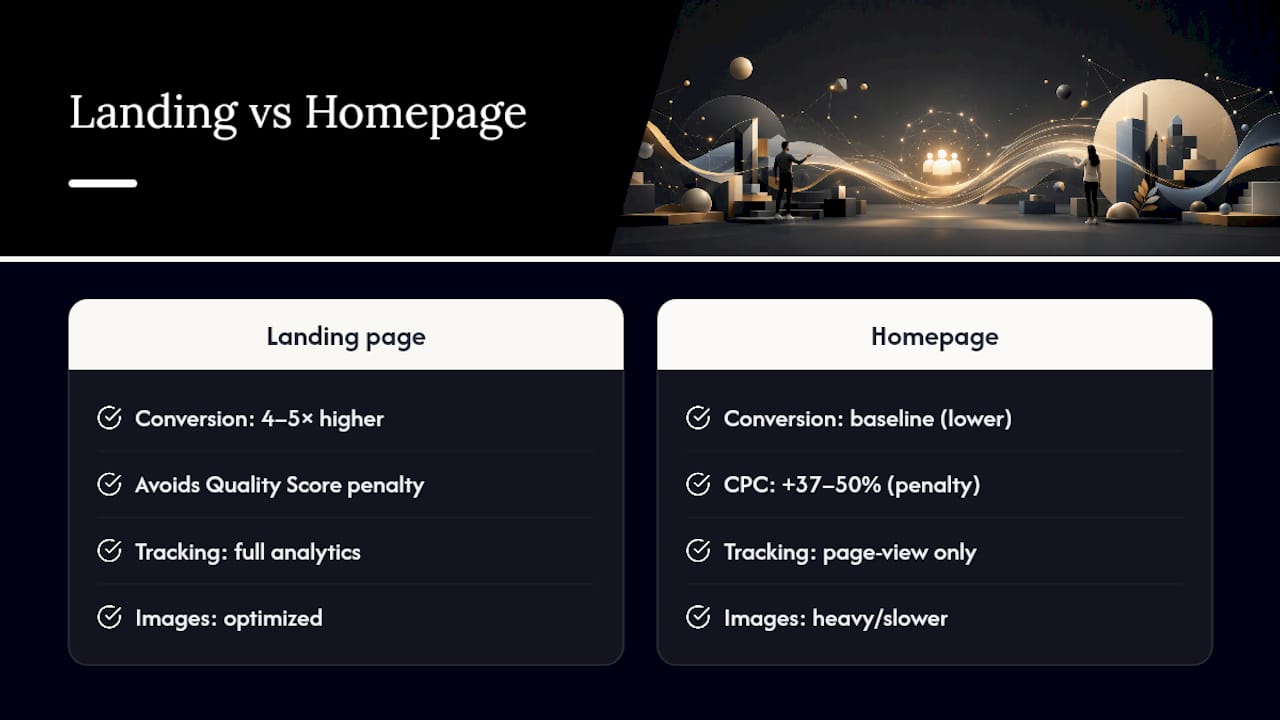
DIY builds fail in predictable ways: the headline doesn’t match the ad that brought the visitor, there’s no real tracking beyond a page-view count, images are heavy and slow the page down, and the copy reads like filler instead of speaking to one buyer’s problem.
A quick no-code builder, running a modest monthly fee, is generally suitable for low-stakes situations, like testing an idea with friends or family traffic. Once you’re paying for clicks or the offer has real complexity, a professional build tends to pay for itself.
Pro Tip: If you’re not sure which camp you’re in, ask yourself what one extra conversion is worth. If that number is over a few hundred dollars, professional help almost always pencils out.
What Should Be on the Deliverables Checklist?
Before you sign off on any proposal, confirm the page hits these minimum elements. Relativemarketinggroup’s 2026 playbook frames these as the seven-part structure of a minimum viable landing page:
- A hero headline matching the ad’s message word for word
- One primary call to action, repeated but never competing with a second offer
- A trust signal or proof element near the top of the page
- Benefits written for the visitor’s specific problem
- A short FAQ that handles the objections that stall conversions
- Mobile-responsive design that doesn’t require pinch-zooming
- A final repeat CTA at the bottom of the page
On the technical side, demand real numbers, not vague promises. Largest Contentful Paint should be fast, and Interaction to Next Paint should be very low to improve user experience and Quality Score. Pricing and key details need to exist as actual text, not baked into images, so tools built to extract information can find them. That includes semantic HTML and schema markup for FAQPage, Product, or Service where they apply.
Timelines vary with scope. A template-based build typically ships in one to three days. A custom page usually takes one to two weeks, and anything involving multiple copy variants, integrations with your CRM, or a rush deadline adds time and cost on top of that.
How Much Does a Small Business Landing Page Cost?
Pricing tracks pretty closely with how much customization and testing infrastructure you need. According to Vezert’s cost and process breakdown, most small business projects fall into a few clear bands:
- Template-based pages: $1,000 to $3,000, best for straightforward offers with a fast turnaround need
- Custom single-page builds: $3,000 to $6,500, for a page with unique design, original photography, or a more involved sales argument
- Testing and variant packages: $4,500 to $12,000 or more, when you need multiple headline or layout versions running against each other
- Ongoing optimization retainers: monthly fees for a team that keeps refining the page based on real conversion data
What pushes a project toward the higher end: extra copy variants, A/B testing setup, CRM or email platform integrations, rush timelines, and any custom-coded interactive elements. Match the package to your traffic. If you’re running a modest local campaign, a template build is usually plenty. If you’re funneling significant ad spend or high-lifetime-value customers through the page, the testing package earns its cost quickly.
How Do You Choose the Right Landing Page Provider?
Comparing proposals gets a lot easier once you know exactly what to ask for. Start with these criteria:
- Evidence of real conversion results, not just design portfolio pieces
- Turnaround speed that matches your campaign timeline
- Technical quality standards, including page speed targets
- Clear analytics and tracking setup as part of the deliverable
- Written clarity on who owns the final copy, design files, and any tested variants
- A defined revision policy so scope doesn’t quietly expand
On a discovery call, ask these questions directly:
- What’s a realistic timeline for a page like mine, start to finish?
- What exactly do I receive when the project closes: files, copy, analytics access?
- Do you test variants, and if so, how long does a test run before you call a winner?
- Who owns the tested copy and design once the project is done?
- What analytics events will be tracked from day one, form submissions, calls, scroll depth?
- What speed and mobile performance targets are you committing to?
Watch for red flags that suggest a rushed or generic job: no case studies or client examples, deliverables described in vague terms like “a modern design,” reliance entirely on stock photography with no attempt at custom visuals, and no willingness to commit to a speed or tracking standard in writing. A provider confident in their process will answer these questions without hesitation, because the answers are the same for every client. Reviewing how consultant websites convert clients is a useful gut check for what a well-built page’s language and structure actually look like.
How We Use AI in Landing Page Projects
AI earns its place in our process at the draft stage: generating headline options, spinning up copy variants, and spotting patterns across a client’s competitors faster than a person could alone. What AI doesn’t touch is strategy, final copy approval, or quality control. Those stay with our team, every time.
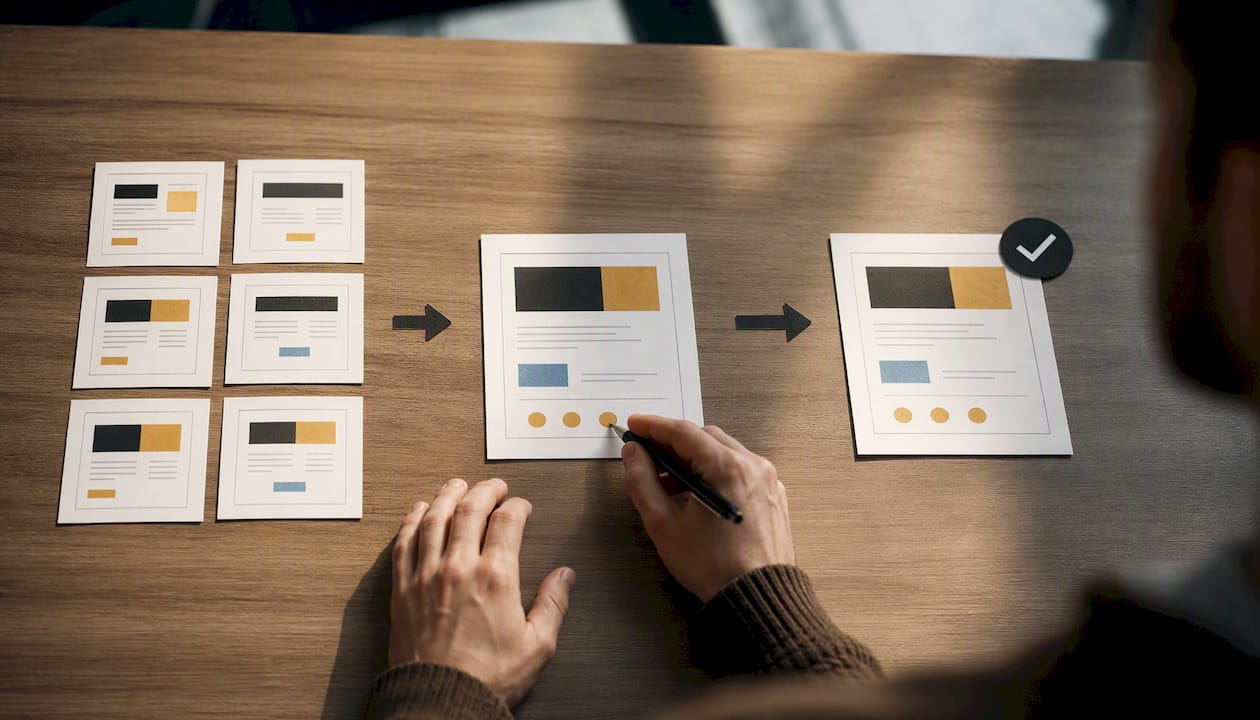
The problems we see most often in existing client pages are predictable: a headline that doesn’t match the ad that drove the click, no analytics beyond a basic visit counter, and images heavy enough to slow load time past the point visitors tolerate. Fixing those three issues alone tends to move the needle before any redesign even happens.
Ready to Build a Landing Page That Actually Converts?
We offer a direct alternative to piecing together a DIY builder and hoping the copy lands. Instead of guessing at message match or waiting weeks for a freelancer’s revision cycle, you get an AI-assisted, done-for-you page built around one offer, with analytics wired in before launch, not bolted on after.
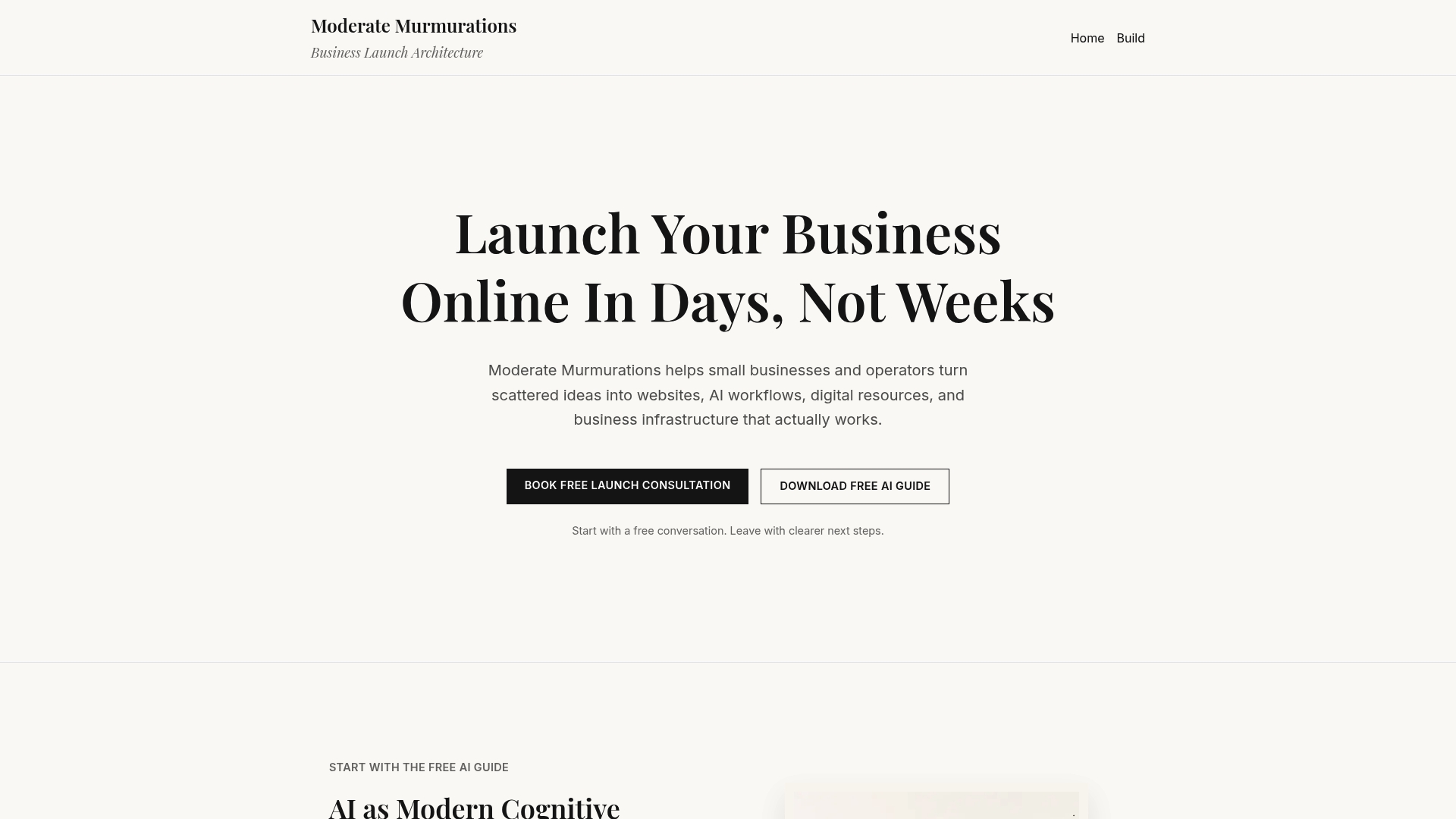
A first call with us covers three things: what your offer needs to say, a realistic timeline based on template versus custom scope, and a price range before any commitment. Many small businesses, coaches, and wellness brands seek services that deliver a landing page live fast without sacrificing key conversion elements. If your campaign is already running or about to launch, book your free consultation and get a scoped quote before your ad budget goes to a page that isn’t built to close.
Sources
- Homepage vs Landing Page for Google Ads (2026 Data)
- Landing Page Design Services: Cost, Process & How to Choose
FAQ
What’s the Difference Between an AI Landing Page and a DIY Builder Page?
An AI landing page in the done-for-you sense is built by professionals who use AI to speed up drafting and testing, then deliver a finished page with copy, design, and tracking included. A DIY builder page is something you assemble yourself using a template tool, usually with far less strategy or testing behind it.
How Long Does It Take to Get a Landing Page Built?
Template-based builds typically ship in one to three days, while custom pages usually take one to two weeks depending on scope and revisions.
How Much Should I Budget for a Small Business Landing Page?
Template-based pages run $1,000 to $3,000, custom single pages run $3,000 to $6,500, and testing or variant packages can reach $4,500 to $12,000 or more.
Do I Really Need a Separate Landing Page If I Already Have a Website?
Yes, especially for paid traffic: dedicated landing pages convert significantly better than homepages, and sending ad clicks to your homepage can raise your cost per click through Quality Score penalties.
What Should I Check After My Landing Page Launches?
Run a short weekly review checking conversion numbers, where visitors exit, mobile load speed, and recent form submissions, so small performance drift gets caught before it costs you conversions.